
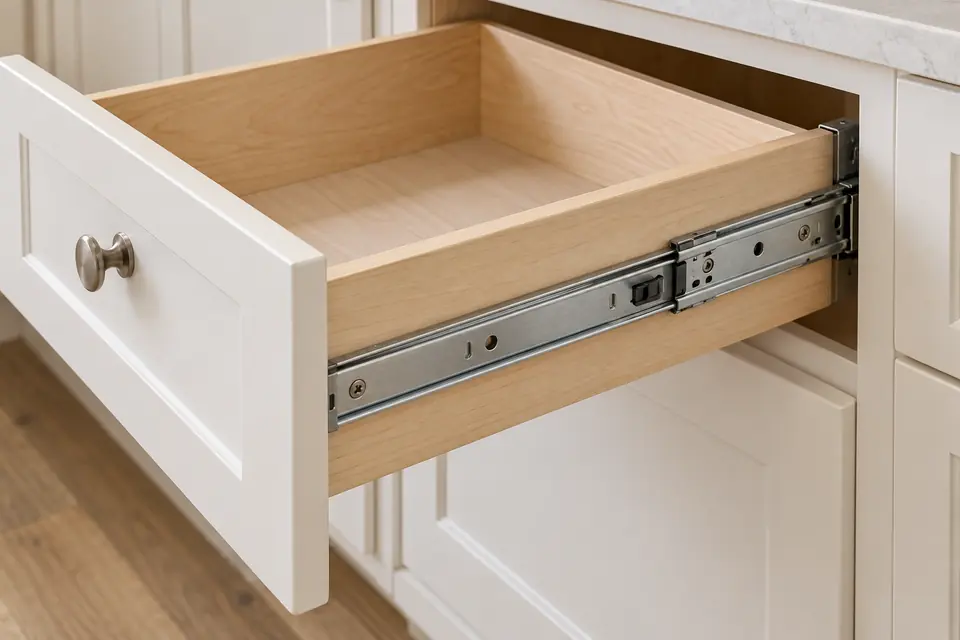
Inventory the existing system
Count the drawers and group them by size and construction. Note whether the slides are visible along the sides or concealed beneath the drawer. Record labels, inside cabinet depth and drawer-box dimensions without dismantling unfamiliar hardware. A wide pot drawer and a narrow utensil drawer may need different hardware even in the same kitchen.
Check the complete conversion
Soft-close is a feature of a compatible system, not a guarantee that an accessory fits every slide. Drawer thickness, bottom construction, locking devices and rear supports may affect the conversion. Blum’s concealed runner systems illustrate why checking the selected product is essential. Ask for one drawer to be assessed before ordering hardware for every drawer in the room.
Specify what a successful upgrade means
Decide whether you want to preserve fronts, gain full extension, reduce slamming or improve alignment. Ask the quote to separate hardware, box alterations and finish work. The final check should include opening clearance, consistent front gaps and operation under the intended normal load. Do not assign the door-adjustment hourly rate to drawer work; VPS must price this scope after reviewing it.
Manufacturer or agency reference: Blum TANDEM system details
Set priorities before choosing a product
Reducing slamming, improving access and straightening uneven fronts are different goals. List which matters most and which drawers are affected. A drawer may already close quietly but still be hard to reach into; another may need a basic repair before any upgrade is worthwhile. A single label such as “soft-close kitchen” can hide those differences.
Describe how the drawers are normally used. A utensil drawer, deep cookware drawer and file drawer do not present identical conditions. Product selection needs the actual construction and intended use, rather than a promise that one accessory will improve every drawer. Ask for the proposed result in ordinary terms so you can assess it after installation without relying solely on a brand or feature name.
Compare an accessory with a system replacement
An add-on device can be appropriate only when it is designed for the existing arrangement and there is room for it to work. A runner replacement may involve different components and drawer preparation. A new box may become part of the proposal when the existing one cannot accept the chosen hardware or is already damaged.
Ask what stays and what changes under each option. Include brackets, locking devices, drawer preparation and front alignment in that discussion. Avoid ordering a set based on an online claim that it is universal. A product may fit one drawer in the room and still be unsuitable for another. Keep the model-specific instructions with the estimate so the proposed conversion can be checked against the actual installation.
Separate drawer work from cabinet-door work
Soft-closing drawers and soft-closing cabinet doors use different hardware. Replacing a door hinge does not convert the drawer beside it. Count doors and drawers separately if both are part of the project, and identify which existing fronts and handles should remain.
Door or drawer fronts may already be out of alignment because of loose fasteners, damaged material or previous alterations. Those conditions need to be included in the repair scope. Otherwise, a quiet closing action could be delivered while the appearance that prompted the request remains unchanged. The hardware installation guide explains how a simultaneous handle change adds layout, drilling and finish decisions to the work.
Plan the sample and the full-room decision
Have one suitable drawer reviewed before committing to hardware for all of them. If a trial installation is agreed, decide which performance and appearance details you will review. Include the feel of opening, the usable extension, the front position and clearance to nearby cabinets. Do not assume the result will transfer to a different drawer size without checking.
A sample can also identify whether the desired upgrade changes usable interior space. For pantry or storage drawers, note the objects that must still fit. Confirm the full quantity only after the representative systems are understood. Keep any remaining unknown drawers listed separately so the estimate does not turn an unresolved compatibility question into a guaranteed room-wide conversion.
Define completion and future service information
Before work starts, agree on access, clearing contents and protecting nearby surfaces. Ask whether old hardware is removed, retained for comparison or discarded. Record any separate cabinet repair, replacement box or finishing task that must happen before the upgrade can be completed.
When reviewing the finished work, use normal operation rather than pushing the mechanism through resistance. Ask for the installed hardware model and any care or adjustment information supplied by its manufacturer. Note outstanding items by drawer location, not as a vague kitchen punch list. This creates a useful record if a different drawer is upgraded later, and it prevents a successful first phase from implying that every drawer has received the same work.