
Decide whether you are replacing a slab or an assembly
A door slab is the moving door itself. A prehung assembly includes the door and its frame. Measuring for one does not automatically provide the information needed for the other. Start by deciding what you hope to retain, then have the existing opening and selected product reviewed before ordering.
If the frame is sound and retaining it is practical, a slab replacement may be considered. If the frame is damaged, badly altered or unsuitable for the intended result, a prehung option may be part of the discussion. This is a scope decision, not something a single width measurement can settle.
The Masonite interior-door measurement guide is a useful manufacturer reference for these distinctions and the measurements involved. The chosen product's current instructions control its requirements. This page helps you prepare an initial record; it does not turn a homeowner worksheet into final installation approval.
Record the existing door width, height and thickness
Label the room and photograph the door from both sides. If normal operation is safe, measure the existing slab's width, height and thickness at accessible locations. State that these are slab measurements, not frame or rough-opening dimensions. Keep the units consistent, and photograph the tape placement where practical.
Older doors may have been trimmed or altered. Note visible uneven edges, previous repairs or a gap that changes around the opening. A nominal size on an old receipt may not describe the slab now installed. Do not round an uncertain measurement into an order size simply because it resembles a common dimension.
Avoid removing a heavy door or unfamiliar hardware just to complete the record. If an edge is not safely accessible, mark it for inspection. The objective is to give VPS enough information to identify the next measurement or decision, without creating damage or losing track of what each number represents.
Understand the rough opening
The rough opening is the construction opening that receives a door assembly; it is not the visible space between the finished jambs. An existing frame and casing can conceal its edges. A finished-opening measurement should not be relabeled as a rough-opening measurement simply to fill a product order form.
When the opening is exposed during planned work, its dimensions can be checked in several locations and compared with the selected unit's requirements. An uneven opening may need attention even if one measurement looks suitable. The manufacturer's sizing instructions should guide that comparison rather than a universal add-on formula.
Do not remove sound casing solely to obtain a preliminary quote measurement. Send the accessible dimensions and explain what is concealed. Ask whether final inspection is needed before purchase. If widening or changing an opening is proposed, separate that work from replacing a door within the existing arrangement and review any structural or local permit implications.
Measure jamb depth and consider finished surfaces
Jamb depth relates to the wall assembly the frame must fit, including its finished surfaces. It is a different measurement from the width through which you walk. Photograph how the jamb meets the wall on both sides and identify unusual trim, tile or paneling that may affect the finished detail.
Changes to flooring or wall finishes can alter the planning conditions. Tell VPS whether flooring is already installed, being replaced or still being selected. A measurement taken before finish changes should be labeled accordingly. Do not assume an existing floor clearance should be copied without review, particularly if the room has a specific ventilation, access or door-system requirement.
Ask how extensions, trim and transitions will be handled if the selected assembly does not align with the existing finishes. These details can change the scope and appearance even when the door size itself is correct. Keep them with the measurement record so they are considered before material is ordered.
Document handing and swing without relying on a guess
Photograph the hinges and show the direction in which the door opens. A quick sketch of the room, hinge side and swing arc can be clearer than a verbal left-hand or right-hand label. Product suppliers may ask for handing in a specific way, so confirm their convention before placing an order.
Note nearby walls, furniture, switches and adjoining doors. A proposed swing change can affect daily use and hardware preparation, not just the side on which the hinges appear. If the intention is to keep the current swing, state that explicitly. If it is to change, explain why and ask for the complete implications to be reviewed.
For double doors, describe both leaves and how they operate. Do not assume the measurements and hardware questions for a single hinged door cover a paired assembly. Keep each opening identified so a room-level door schedule does not mix handedness or dimensions between similar-looking doors.
Hinge and lock preparation must match the plan
For a slab in an existing frame, hinge locations and preparation are part of compatibility. Record the number of hinges and photograph their shape and visible size. If an existing measurement is accessible, label its reference point. A replacement slab that is the right overall size may still need different preparation from the old one.
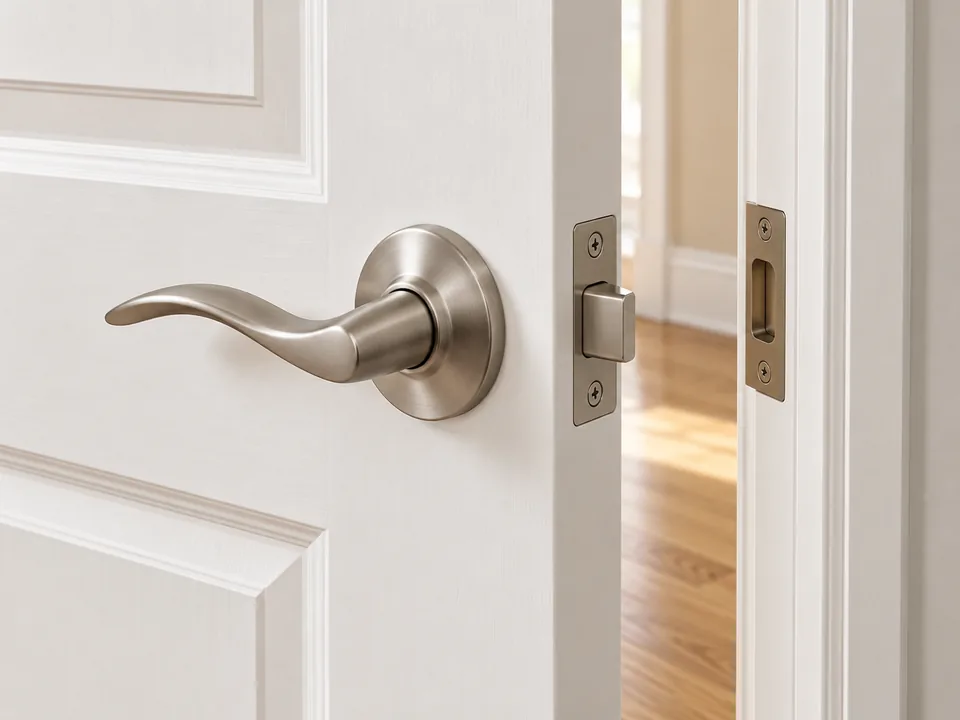
Lock preparation also matters. Show the existing handle, latch edge and strike area. State whether the hardware will be reused or replaced, and provide product information for a proposed replacement. Hole spacing, latch arrangement and door thickness should be checked against the actual hardware rather than assumed from appearance.
Do not drill or deepen recesses to make a newly purchased slab fit before the full arrangement is reviewed. Permanent alterations can limit return options and make the original compatibility problem harder to resolve. Ask who performs preparation and whether the supplied product is blank, partly prepared or ready for the agreed installation.
Inspect problem openings before ordering
A door that repeatedly rubs, a frame that appears out of alignment or material with moisture damage should be assessed before replacement is treated as a simple product exchange. Describe when the problem occurs and any nearby changes. A new slab may reproduce the same fault if the opening itself needs repair.
Share visible cracks, looseness or previous patching without probing concealed material. If the assembly is unstable, avoid operating it for photos. The door repair cost guide explains how repair and replacement scopes differ. The sticking-door guide provides related symptom questions for an initial request.
Where the building has special door requirements, such as a labeled assembly or a door serving a particular protected separation, identify that before choosing a replacement. Do not assume every interior opening accepts an ordinary decorative door. An appropriate professional should review requirements that depend on the building and location.
Make a measurement sheet that can be checked
Use one sheet per opening with the room name, photos, slab dimensions, visible frame measurements, jamb detail, swing sketch, hinges and hardware plan. Mark each entry as measured, taken from product documentation or awaiting inspection. This prevents a provisional estimate from becoming an apparently confirmed ordering dimension.
Include the desired finish and what should happen to the old door, frame and trim. Ask whether the quote includes preparation, hardware, painting or staining, disposal and any surrounding repairs. The interior-door installation guide can help organize the broader project comparison.
Before purchase, have the supplier or installer confirm the selected product against the actual opening and agreed scope. At completion, review normal swing, latching, clearances and the specified finish. Keep the final product information with the opening record so later hardware or finish work is based on what was installed.